
At Farmers for Forests, we build open-source technology to bring accountability and transparency to nature-based solutions. Manual tree counts were slow, and satellite data lacked the resolution we needed — so we created a complete tech stack to monitor every tree, every hectare, in real time.
Data Collection — drones and satellites, our WhatsApp chatbot ChutkiAI, and FieldHQ.
Project Anāhitā — TreeLens, the Impact Dashboard, and the Forest Protection Dashboard.
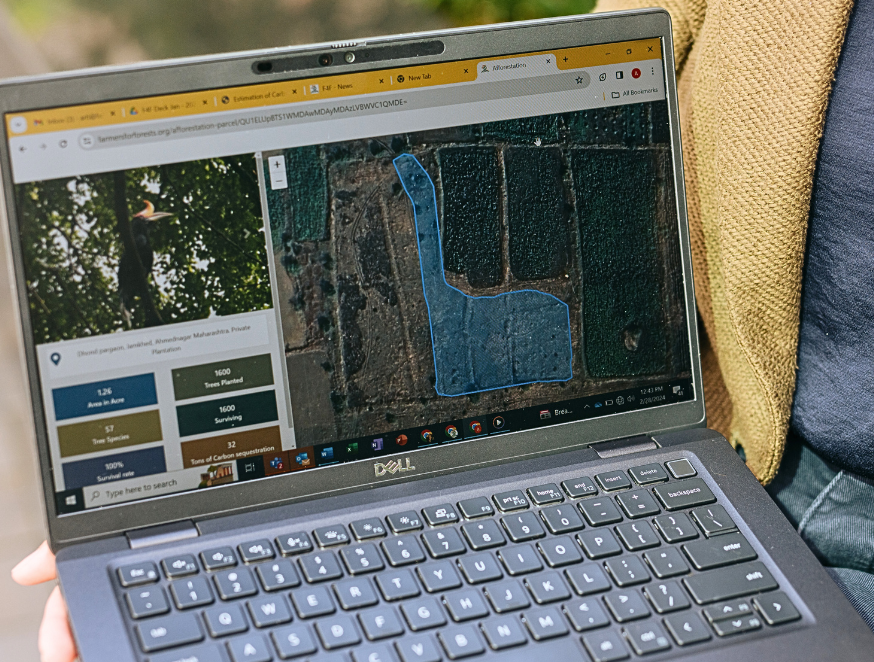
High-resolution drone imagery, combined with satellite data, gives us centimeter-level views of every farm and forest we work in. This enables tree counts, health assessments, and land-use mapping that were impossible with manual methods.
Our central hub for field operations — uniting farmer, land, and inventory data into a real-time view of thousands of hectares. It helps teams track resources, spot gaps, and stay accountable at every step.
Our multilingual WhatsApp-based chatbot 'Chutki AI' keeps us connected to farmers — sharing updates, collecting feedback, and supporting enrollment, all through a tool they already use every day.
Our open-source AI suite transforms field data into powerful insights — scalable, transparent, and cost-efficient. Within the Project Anāhitā ecosystem, three core tools work together to track and amplify impact.
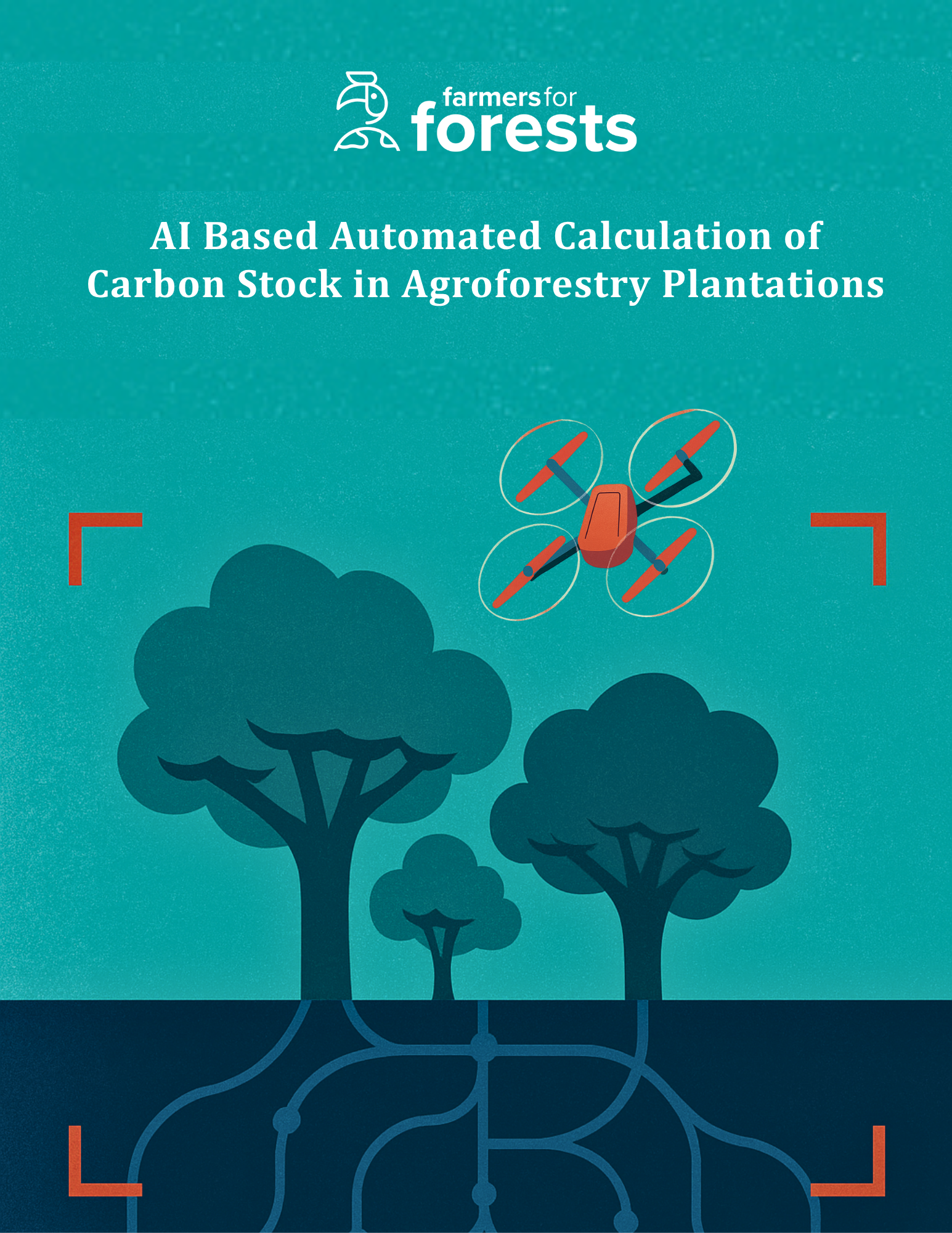
TreeLens analyzes drone imagery to count and geo-tag every tree, identify species, estimate carbon sequestration, and assess health. It detects even saplings under four feet tall, giving us tree-by-tree precision from year one of planting.
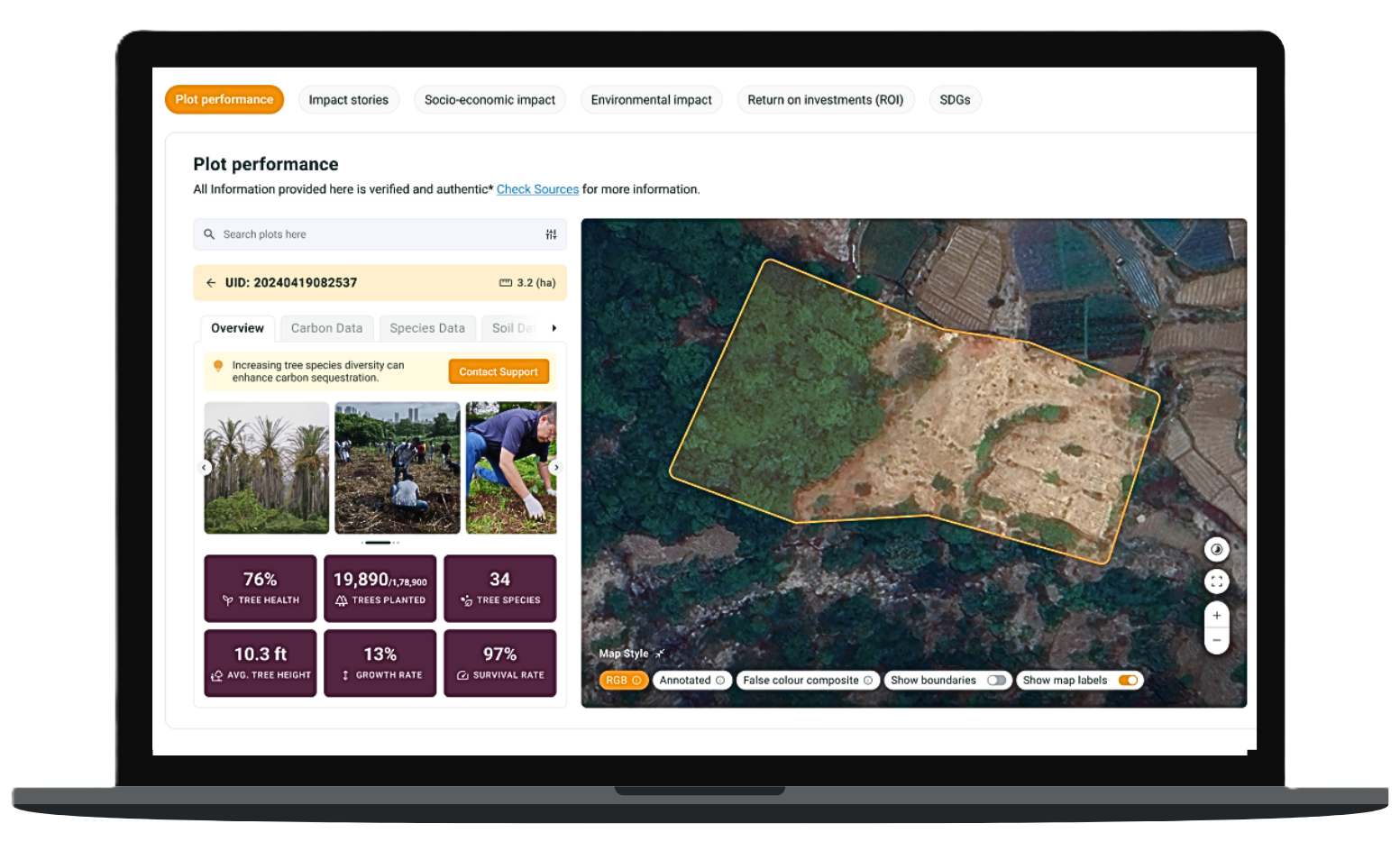
Our impact dashboard visualizes environmental outcomes — tracking survival rates, growth, biodiversity, water savings, and carbon captured. It turns complex data into simple insights for funders, enabling transparent impact reporting.
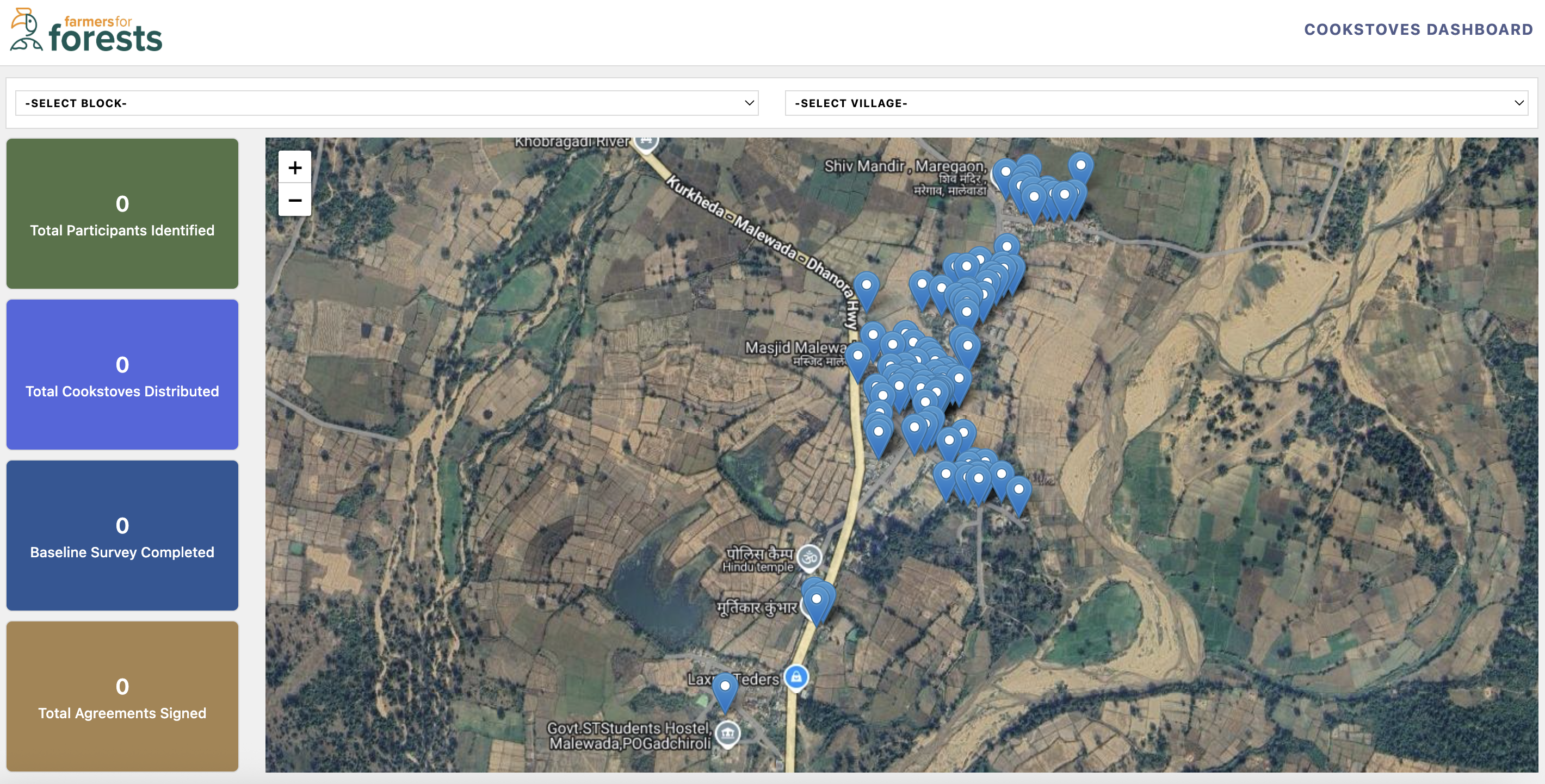
This platform tracks forest health and reduction in logging, while monitoring cookstove adoption, to estimate carbon saved through reduced fuelwood use. It combines satellite data, field reports, and community inputs for a clear view of impact.
To try out any of our platforms, please contact us at tech@farmersforforests.com
We are delighted that you are considering supporting Farmers for Forests. Your donation makes a big difference in our fight against climate change and its devastating impact on India's vulnerable farmers, indigenous and rural communities.
Support Us